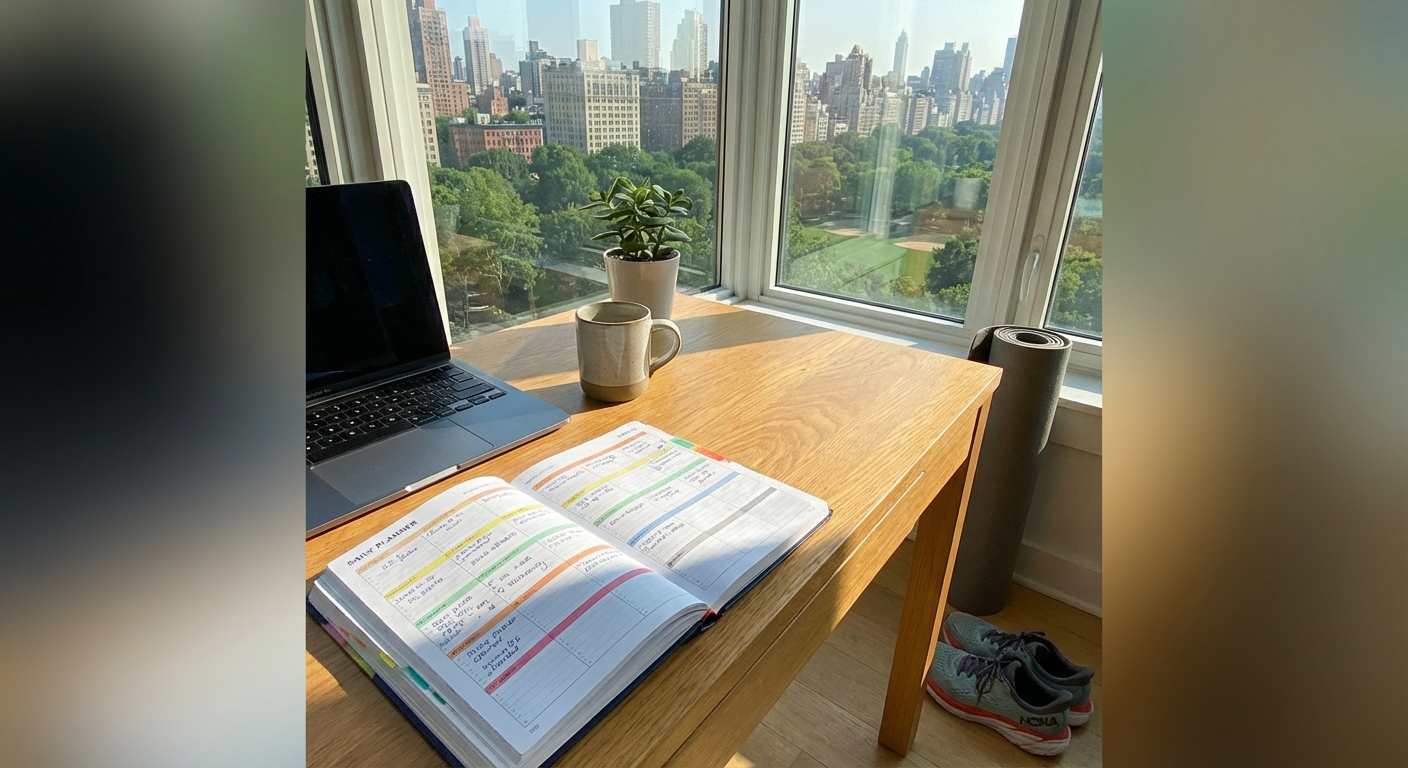

The Art of An Intentional Life: Living On Purpose, Not Just On Auto‑Pilot
We’re all busy building “a life” — careers, feeds, calendars stacked with plans. But at some point it hits: am I actually living this life, or just maintaining it? An intentional lifestyle isn’t about throwing everything out and moving to a cabin in the woods. It’s about designing your days so they reflect what you actually value, not just what you’ve accidentally agreed to. This is about small, conscious choices that add up to a life that feels aligned, not just impressive on paper.
What It Really Means To Live Intentionally
Living intentionally is less about having a perfect routine and more about knowing why you’re doing what you’re doing. It’s the difference between saying yes to every invite because you’re afraid of missing out and choosing plans because they nourish you. It’s closing the laptop at 6 p.m. not because someone told you to “have better work–life balance,” but because you’ve decided your evenings belong to relationships, creativity, or rest.
Modern life rewards reactivity. Notifications, emails, breaking news — everything is engineered to grab your attention first and ask questions later. Intentional living flips that. You decide what matters, then build your time and energy around it. It might look like protecting one screen‑free hour a day, or finally admitting you don’t actually enjoy “networking drinks” and would rather have one deep conversation with a close friend.
This shift isn’t instant. It’s a series of micro‑decisions: how you start your mornings, what you let into your mind, who gets your best energy, and what you’re willing to walk away from. Over time, those choices create a very different kind of day — and a very different version of you.
Balancing Ambition With Actual Wellbeing
Most of us were trained to treat achievements as proof of our worth: promotions, milestones, metrics. There’s nothing wrong with ambition; it’s powerful and necessary. The problem starts when your schedule is full and your life feels empty. Burnout isn’t a badge of honor — it’s a mismatch between your pace and your capacity.
A balanced, fulfilling life doesn’t mean you stop caring about growth. It means you stop sacrificing your health, relationships, and sanity to get there. Think of your energy like a budget: if everything is “urgent,” everything becomes underfunded. Sleep, movement, downtime, and play aren’t extras; they’re infrastructure. They’re what your big goals are built on.
Balance in a modern lifestyle is dynamic, not static. Some weeks will tilt toward career, others toward family or rest. The key is noticing when one area is consistently starving. When you’re intentional, you adjust before your body or your mind forces you to. You learn to ask, “What season am I in — and what needs more of me right now?”
Practical Tip 1: Define Your “Non‑Negotiables” For Everyday Life
Before you can live more intentionally, you need to know your personal non‑negotiables — the things that keep you grounded, clear, and human, no matter how busy life gets.
Start by listing what you need to feel like yourself: maybe it’s 7–8 hours of sleep, daily movement, a weekly call with someone who really knows you, or an hour of creative work that isn’t tied to your job. Then, instead of treating these as “nice if I have time,” block them into your week first and let everything else fit around them.
This doesn’t require a complete life overhaul. It might look like going to bed 30 minutes earlier, doing a 15‑minute walk between meetings, or cooking one actual meal on Sundays because it makes the whole week feel saner. The goal: when life gets chaotic, your non‑negotiables act like anchors. You may bend, but you don’t break.
Practical Tip 2: Curate Your Inputs As Carefully As Your Outputs
What you consume — media, conversations, environments — quietly scripts how you think and feel. If your day starts with an alarm, followed by news alerts, emails, and a scroll through everyone else’s highlight reel, you’ve handed your mind to the loudest voices in the room.
Curating your inputs doesn’t mean living in a bubble; it means being selective. Choose a few trusted news sources and check them once or twice a day instead of every hour. Unfollow accounts that trigger comparison or anxiety and lean into those that inspire, educate, or genuinely entertain. Pay attention to how you feel after spending time with certain people — energized, flat, or drained — and adjust accordingly.
You can also design micro‑rituals that reset your mental environment: reading something nourishing for 10 minutes in the morning, playing a playlist that calms you while commuting, or setting your phone to “Do Not Disturb” during deep work or meals. When you’re thoughtful about what enters your headspace, your choices become less reactive and more intentional.
Practical Tip 3: Build Micro‑Moments Of Presence Into Ordinary Days
You don’t have to meditate on a mountaintop to experience real presence. You can practice it while washing dishes, walking the dog, or waiting for your coffee to brew. The goal is to bring your attention back to this moment, instead of mentally time‑traveling to your inbox or last night’s conversation.
Pick a few daily “anchors” — routine tasks you already do — and turn them into presence checkpoints. While brushing your teeth, feel your feet on the floor, notice your breath, and let your thoughts slow down. During a walk, put your phone away and actually look at your surroundings — colors, sounds, air on your skin. When you eat, taste your food instead of scrolling.
These micro‑moments don’t add time to your day; they change the quality of the time you’re already spending. Presence lowers stress, sharpens focus, and often makes ordinary life feel more textured and alive. Over time, you train your nervous system to recognize that not everything is an emergency — and you start responding to life instead of constantly bracing for it.
Practical Tip 4: Treat Your Calendar Like A Values Document
Your calendar is a mirror: it shows what you actually value, not what you say you value. If you say health matters but never move, or say relationships matter but reschedule friends every week, there’s a gap worth closing — not with guilt, but with honesty.
Once a week, look at your upcoming days and ask, “Does this reflect what I care about right now?” If it doesn’t, adjust. That might mean declining a recurring obligation that no longer fits, blocking out time for a project that’s important but not urgent, or protecting one evening for doing absolutely nothing.
Learning to say no is part of this. You don’t owe everyone your constant availability. A simple, modern boundary might look like, “I’m not available this week, but I can do next Tuesday,” or “I can’t take this on fully, but here’s what I can do.” When your calendar starts aligning with your values, your days feel less like something happening to you and more like something you’re actively shaping.
Practical Tip 5: Regularly Redefine What “Success” Looks Like
Success used to be simple on paper: a job title, a salary, a certain lifestyle. Now, more people are realizing that external success without internal alignment is expensive — it often costs your health, joy, and time. Redefining success is a continuous practice, especially in a world that keeps handing you templates for what your life “should” look like.
Every few months, ask yourself: What does success look like for me in this season? It might be building financial stability, yes — but it might also be repairing a relationship, protecting your mental health, learning a new skill, or finally having weekends that aren’t swallowed by work.
Write down a handful of success markers that feel true right now and let them guide your decisions. When an opportunity or request shows up, hold it against your current definition: Does this move me closer to or further from the life I actually want? That filter alone can save you from a lot of beautifully packaged distractions.
Conclusion
Modern life isn’t slowing down for any of us. But within that pace, you still get to choose: drift on autopilot, or live with intention. A balanced, fulfilling lifestyle isn’t about escaping reality; it’s about engaging with it more consciously — defining your non‑negotiables, curating what you let in, creating tiny pockets of presence, aligning your time with your values, and rewriting what success means for you.
You don’t need a perfect routine, a new identity, or a complete reset. You need one honest decision, followed by another, and another. The art of an intentional life is built in the small moments — the ones you usually rush past. Start there, and let your everyday choices become the clearest expression of who you actually are.
Sources
- National Institute of Mental Health – Stress Basics - Overview of how stress affects the body and mind, reinforcing the importance of intentional, balanced living
- Harvard T.H. Chan School of Public Health – Sleep and Health - Explains why consistent, quality sleep is a foundational “non‑negotiable” for health and performance
- American Psychological Association – Mindfulness Meditation: A Research-Proven Way to Reduce Stress - Summarizes evidence on presence and mindfulness practices in everyday life
- Mayo Clinic – Work-Life Balance: Tips To Reclaim Control - Practical guidance on aligning time, work, and personal priorities
- Yale University – The Science of Well-Being (Course Overview) - Research-based insights into what actually contributes to happiness and life satisfaction