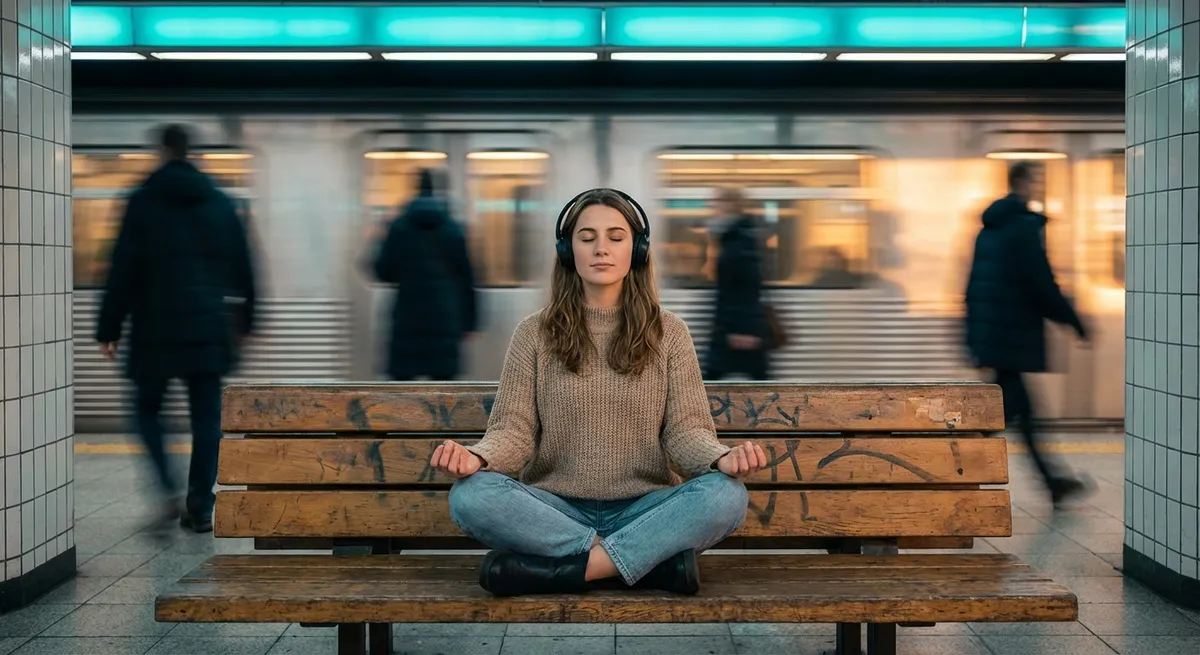

Mindfulness as Your Edge: Living Awake in a High-Speed World
Life isn’t slowing down for any of us. Notifications, news cycles, side hustles, endless tabs—everything is designed to pull you outward. Mindfulness isn’t about escaping that reality or moving to a cabin in the woods. It’s about building a sharper presence inside the life you already have, so you can make better decisions, protect your energy, and actually enjoy the moments you’re working so hard to create.
This isn’t “zen in a vacuum.” It’s mindfulness as a modern advantage—something you can plug directly into your schedule, your relationships, and your goals.
Mindfulness as a Performance Tool, Not Just a Peace Tool
For a long time, mindfulness got boxed into one lane: calm. Candles, cushions, soothing playlists. That’s one version, but it’s not the whole story.
At its core, mindfulness is the skill of noticing what’s happening—inside you and around you—without immediately reacting to it. That gap between stimulus and response is where everything changes: your choices, your mood, your results.
In a high-speed world, that gap is a performance enhancer. Athletes use it to reset between plays. Founders use it to make cleaner decisions under pressure. Creators use it to stay in flow instead of spinning in comparison. A mindful mind doesn’t eliminate stress, but it helps you meet stress with clarity instead of chaos.
You don’t need perfect conditions to practice it. You need micro-moments: in the elevator, in the rideshare, in the 30 seconds before a meeting starts. Over time, those small pockets of awareness stack into a different way of living—less autopilot, more agency.
Redefining Balance for a Life That’s Actually Full
The word “balance” gets tossed around like it’s a static state you eventually reach and then maintain forever. Real life doesn’t work like that. Some weeks lean into work. Others lean into relationships, health, creativity, or recovery. The goal isn’t symmetry; it’s intentional imbalance.
Modern mindfulness means you’re awake enough to notice: What season am I in right now? What actually matters this week—not in theory, but in reality? Without that awareness, “balance” becomes a guilt generator. With it, balance becomes permission: to go all-in when it matters, and to step back when your body or mind throws up a flag.
Instead of chasing some mythical, evenly distributed life, think of balance as a living rhythm. Mindfulness is how you hear the tempo shift—when your focus is fried, when your body is tired, when your relationships need time, when your creativity is asking for space.
From there, you’re not just reacting to your calendar. You’re designing around your energy, your values, and your current capacity.
Five Practical Mindfulness Moves for a Fuller, More Balanced Life
Below are five grounded, real-world ways to weave mindfulness into a modern lifestyle. No retreats required. Just experiments you can plug into the week you’re already living.
1. Start Your Day with a 3-Minute “System Check”
Before you check your phone, check in with yourself.
Sit at the edge of your bed or stand by a window. Close your eyes or soften your gaze. For three minutes, move through three simple questions:
- Body: What sensations are here right now? (Tension, lightness, hunger, stiffness—just notice.)
- Mind: What’s the loudest thought or worry running in the background?
- Direction: What’s one thing that would make today feel meaningful—not just productive?
You’re not trying to fix anything in those three minutes. You’re simply tuning in before the world tunes you out. This tiny habit shifts your default mode from reactive to intentional, and it trains you to listen to real data from your body and mind instead of only your to-do list.
Tip: Set a recurring “system check” reminder at the same time every morning for a week and notice how your choices subtly change.
2. Turn Everyday Transitions into Micro-Meditations
You already have built-in pauses in your day: walking to the kitchen, opening a new tab, waiting for a video call to start, sitting on a train, standing in line. Most of us fill these with scrolling or mental chatter. These are prime spaces to practice presence.
Pick one transition (for example, every time you close your laptop or every time you step into an elevator). For 60 seconds:
- Feel your feet—or your seat—making contact with the ground or chair.
- Take 4 slow breaths in through your nose, out through your mouth.
- Label what you notice: “hearing,” “thinking,” “tension,” “boredom,” without judging it.
This is mindfulness in its raw form: training attention, noticing without editing, returning to the moment. Over time, these 60-second reps strengthen your ability to stay calm and centered when things ramp up—because you’ve practiced coming home to yourself in low-stakes moments.
3. Use “Single-Task Sprints” to Protect Your Focus
Constant multitasking isn’t neutral. Every shift—text, notification, new tab—costs brain energy and clarity. Mindfulness, in modern terms, is also about intentional monotasking: choosing one thing and actually being in it.
Try this:
- Choose one task that matters (writing, strategy, studying, deep conversation).
- Set a 20–25 minute timer.
- Put your phone in another room or on airplane mode. Close extra tabs.
- For the duration of the sprint, your only job is to do that one thing and notice when your mind wants to escape.
- When it does wander, label it (“planning,” “worrying,” “Instagram urge”) and gently come back.
The goal isn’t perfect concentration. The goal is training the “return” muscle—the ability to notice you’ve drifted and bring yourself back without drama. That’s mindfulness applied to modern work, and it’s a direct antidote to scattered, shallow focus.
4. Practice “Signal Listening” with Your Body
Your body is constantly sending information: tight shoulders, racing heart, shallow breath, clenched jaw. Most of us override those signals until they turn into headaches, burnout, or emotional blowups.
Mindfulness turns your body into an early-warning system rather than a last-resort siren.
Once or twice per day, pause and scan from head to toe:
- Where am I holding tension?
- How’s my breathing—high and shallow or low and steady?
- Do I feel wired, flat, or steady?
Then make one micro-adjustment based on what you find:
- If your jaw is clenched, drop it and exhale slowly.
- If your shoulders are up by your ears, roll them back and down.
- If your breath is shallow, inhale for a count of 4, exhale for a count of 6, five times.
This isn’t about perfection; it’s about building a relationship with the signals before they escalate. Over time, you’ll catch your stress patterns earlier—and you’ll have go-to ways to regulate before you crash.
5. Close the Day with a 5-Line Reality Check
Mindfulness isn’t just about how you enter the day. It’s also about how you leave it.
Instead of ending the night in a scroll spiral, experiment with a 5-line evening check-in. In a notebook or notes app, respond to:
- One thing I actually completed today:
- One moment I genuinely enjoyed:
- One emotion I noticed clearly:
- One thing I want to release before tomorrow:
- One small intention for tomorrow’s mood (not tasks):
This practice does three things at once:
- It grounds you in what actually happened instead of what you think you “should” have done.
- It helps your brain register wins and moments of joy, which reduces the tendency to fixate only on stress.
- It sets a tone for tomorrow that’s guided by how you want to feel, not just what you think you have to do.
It’s mindfulness as integration: pulling the day into focus so you don’t carry a vague sense of failure or frenzy into your sleep.
Mindfulness That Fits the Life You’re Really Living
You don’t need to quit your job, change cities, or become a different person to live more mindfully. You need a handful of small, repeatable practices that bring you back to yourself in the middle of real life: meetings, commutes, group chats, deadlines, school runs.
Awareness isn’t a luxury; it’s infrastructure. It underpins the choices that shape your days: how you use your time, where you put your attention, how you treat your body, how you show up for people you care about, how you respond when things don’t go to plan.
Start small. Pick one of the five practices and run it as a one-week experiment. Notice what shifts—not just in your stress levels, but in your clarity, your focus, your ability to enjoy the good moments when they’re actually happening.
Mindfulness doesn’t remove the noise of the modern world. It simply gives you the volume control back.
Sources
- National Institutes of Health – Meditation and Mindfulness: What You Need To Know - Overview of mindfulness and meditation, health effects, and current research
- American Psychological Association – Mindfulness Meditation: A Research-Proven Way to Reduce Stress - Explores psychological benefits of mindfulness, including stress reduction and emotional regulation
- Harvard Health Publishing – Mindfulness Practice Leads to Structural Brain Changes - Summarizes research on how mindfulness affects the brain
- Mayo Clinic – Mindfulness Exercises - Practical, medically reviewed mindfulness techniques for everyday life
- Greater Good Science Center, UC Berkeley – What Is Mindfulness? - Defines mindfulness and compiles research and practices rooted in psychology and neuroscience