The Quiet Tug-of-War Between Your Online and Offline Self
Our lives now exist in two overlapping worlds:
- The digital world: messages, feeds, video calls, notifications.
- The analogue world: your body, your breath, the people and spaces around you.
Most of us spend far more time in the digital world than we ever planned. We wake to our phones, work on screens, relax with streaming, and fall asleep scrolling. It’s efficient—and also quietly exhausting.
Digital tools aren’t the enemy. They connect us, empower our work, and give us instant access to information. But when there’s no balance, your mind and body pay the price.
This article explores the difference between digital wellness and analogue wellness, and how to design a healthier relationship with both.
What Is Digital Wellness?
Digital wellness is the practice of using technology in ways that support, rather than sabotage, your wellbeing.
It includes:
- Setting boundaries around screen time and notifications
- Using tech intentionally instead of habitually
- Choosing platforms and tools that genuinely add value
Healthy digital habits might look like:
- Turning off non-essential notifications
- Using focus modes during deep work
- Curating your feed so it inspires rather than drains you
Digital wellness recognizes that tech is here to stay—but your nervous system still has limits.
What Is Analogue Wellness?
Analogue wellness is everything that anchors you in the physical, sensory, non-screen world:
- Moving your body
- Being outdoors
- Face-to-face conversations
- Cooking, reading, creating with your hands
These activities regulate your nervous system, reduce stress, and remind you that life is happening here, in this moment—outside the glowing rectangle.
Analogue wellness is not about nostalgia; it’s about biology. Your body needs real-world input to feel safe, grounded, and alive.
Why You Need Both
A purely analogue life is unrealistic for most modern people. A purely digital life is unsustainable.
You need digital tools to:
- Work and collaborate
- Learn and stay informed
- Maintain long-distance relationships
You need analogue experiences to:
- Sleep well
- Feel present in your own life
- Maintain mental clarity and emotional balance
Wellness in the modern age is about integration: using technology on purpose while regularly returning to your physical, offline world.
5 Practical Tips to Balance Digital and Analogue Wellness
1. Set “Anchor Activities” That Are 100% Offline
Anchor activities are daily routines that happen without screens. They serve as touchpoints that remind your body: we live here, not inside the feed.
Examples:
- Drinking your morning coffee without your phone
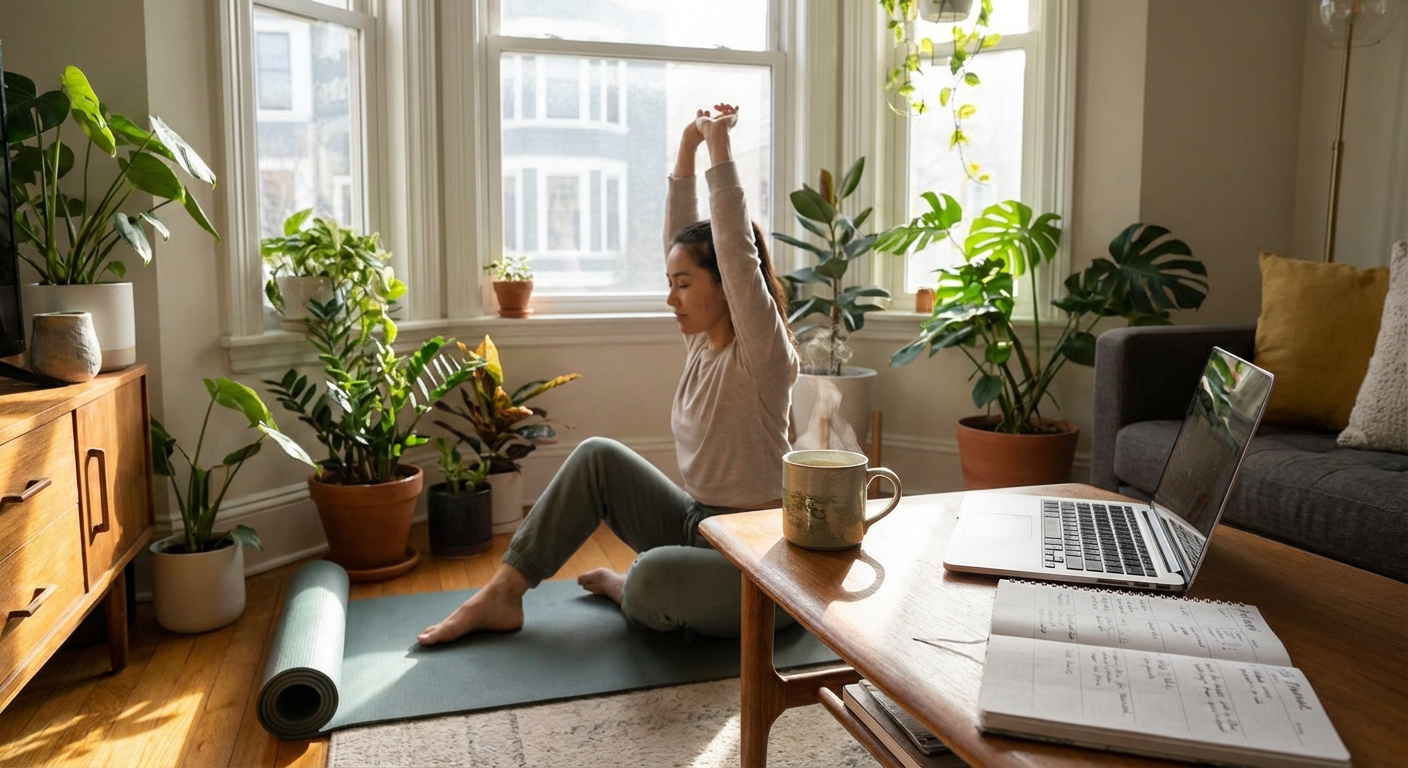
- Stretching or walking for 10 minutes with no devices
- Cooking one meal a day without a podcast or video on
Choose at least one anchor activity for your morning and one for your evening.
2. Use Tech With Clear Intent, Not as a Default
Before you unlock your phone or open your laptop, ask:
> What am I here to do?
Say it in your head or write it down:
- "I’m here to reply to three emails."
- "I’m here to check directions."
- "I’m here to send a message to a friend."
When you finish that task, pause. Decide whether you’re done or consciously choosing the next action.
This simple question helps you:
- Prevent unconscious scrolling
- Reclaim your attention
- Turn tech into a tool instead of a reflex
3. Create Device-Free Micro-Zones
You don’t need a full digital detox to feel better. Instead, establish a few places or moments where screens aren’t welcome.
Ideas:
- No phones at the dining table
- No laptops in bed
- No screens for the first 15–30 minutes after waking
These rules might feel small, but they create pockets of genuine presence and rest.
4. Schedule “Analogue Refills” Like Appointments
Your energy and focus are like batteries that drain with heavy screen use. Analogue activities are how you recharge.
Try adding at least one of these into your weekly schedule:
- A walk in nature (park, trail, or just a tree-lined street)
- A hobby that uses your hands (drawing, gardening, cooking, craft)
- Meeting a friend in person with phones kept off the table
- Reading a physical book or magazine
Put it in your calendar and treat it like a non-negotiable meeting—with yourself.
5. Build a Gentle Evening “Screen Landing” Routine
Screens late at night can disrupt your sleep, overstimulate your brain, and make it harder to wind down.
Instead of going from full brightness to lights out, create a landing routine:
- Choose a time (30–60 minutes before bed) when you stop work-related screen use.
- Reduce brightness or switch to warmer tones.
- Switch from interactive content (social feeds, emails) to passive or analogue (music, reading, stretching).
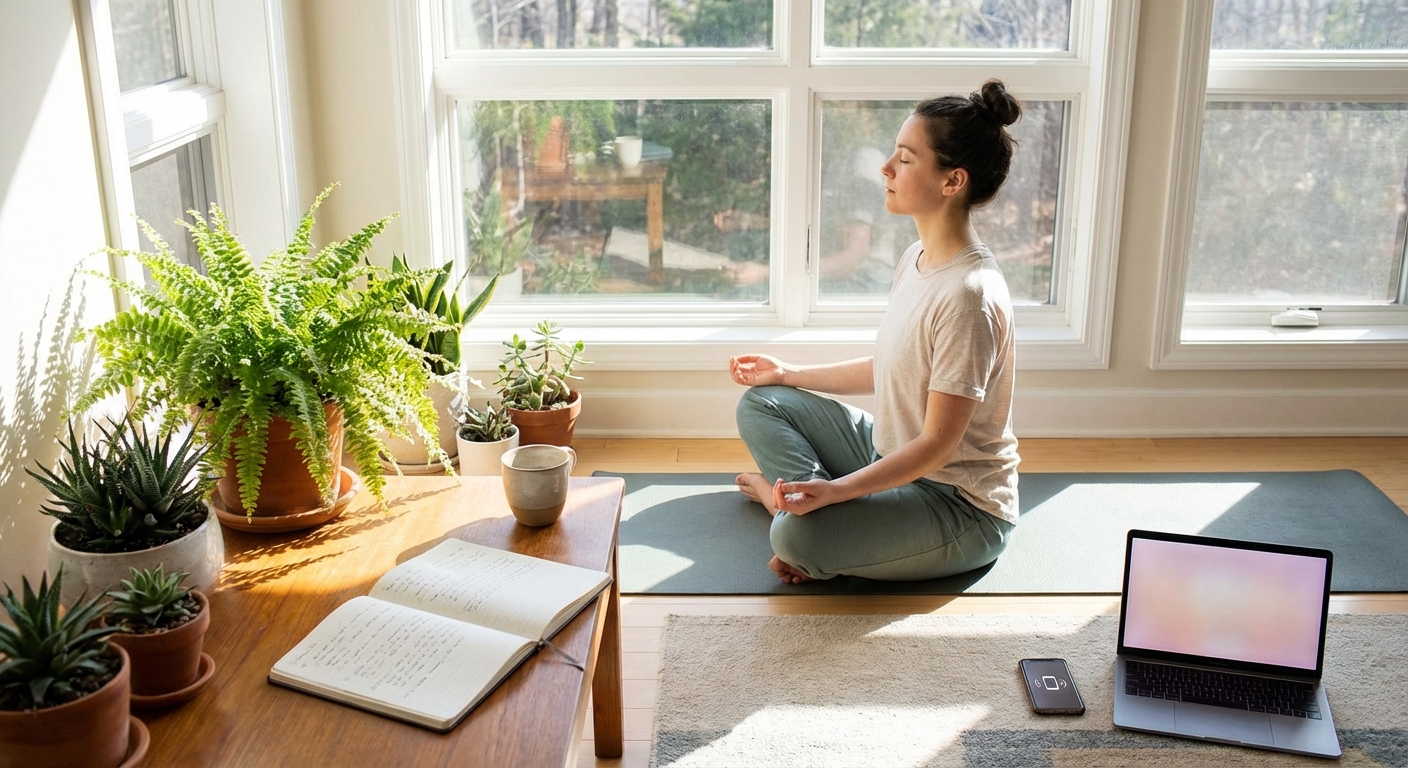
Finish your night with something fully offline—a few pages of a book, a journal entry, or simple breathing exercises.
How to Tell If Your Balance Is Off
You might be leaning too far into the digital world if:
- You reach for your phone before you’ve even sat up in bed.
- You feel anxious or restless when you’re offline.
- You struggle to read more than a few pages of a book without checking your phone.
- Your sleep feels shallow or disrupted.
- Most of your social energy goes into online interactions.
You might be underusing digital wellness tools if:
- Your notifications are always on and constantly distracting you.
- You have no separation between work time and personal time.
- Your feeds are full of content that triggers comparison, outrage, or anxiety.
These aren’t reasons to judge yourself—they’re simply signals inviting you to adjust.
Living Well in a Screen-Heavy World
You don’t have to pick a side: online or offline. Your wellbeing lives in the relationship between the two.
By building a few simple habits—anchor activities, intentional tech use, device-free zones, analogue refills, and a gentle evening landing—you create a life where screens work for you, not against you.
The goal isn’t to escape the digital world. It’s to remember that your real life still happens in your body, in your home, and in the conversations that don’t need a Wi‑Fi connection.