Digital Calm, Real Life: Building Wellness That Survives Your Notifications
Your life isn’t happening “someday.” It’s happening between Slack pings, group chats, late-night scrolling, and that voice in your head whispering you should be doing more. Wellness isn’t about checking out from all of that; it’s about learning how to live well right in the middle of it.
This isn’t a retreat-in-the-mountains fantasy. It’s about crafting a real, modern life that feels grounded, energized, and actually yours—even when your phone is buzzing and your calendar looks wild.
Let’s talk about what balanced, fulfilling living looks like when your world is online, on-demand, and always “on.”
Rethinking Wellness for a Hyper-Connected Life
Wellness used to sound like something reserved for people with a lot of free time and a yoga studio membership. Today, it has to fit into commutes, shared calendars, side hustles, and the endless pressure to “optimize” everything.
Modern wellness isn’t about chasing perfection or avoiding stress altogether. It’s about building a life where:
- Your days feel intentional, not just reactive
- Your body isn’t running on fumes
- Your mind gets space to breathe
- Your relationships feel like fuel, not another task
- Your goals are ambitious and humane
Stress isn’t the villain; chronic, unmanaged stress is. Research shows long-term stress can increase the risk of anxiety, depression, heart disease, and sleep issues. But short bursts of stress—paired with recovery—can actually support growth and resilience.
The real shift? Stop trying to “fix” yourself and start designing rhythms that support you. Wellness becomes less about hacks and more about honoring how human you actually are.
Tip 1: Create Micro-Rituals, Not Massive Routines
The old model of wellness: wake up at 5 a.m., drink celery juice, meditate for 30 minutes, journal, run, read, and then start your day.
Reality: your alarm goes off, you hit snooze twice, and now you feel like you’ve already failed.
Micro-rituals are small, repeatable actions that anchor your day without demanding your entire schedule. They’re the opposite of all-or-nothing thinking.
Examples of powerful micro-rituals:
- 60-second morning check-in
Before touching your phone, ask: How do I feel? What do I need today? Name one emotion, one need, one intention.
- Transition breaths
Three slow, deliberate breaths when you switch from work to home, meeting to meeting, or screen to sleep. Inhale through your nose for four counts, exhale for six.
- Anchor beverage
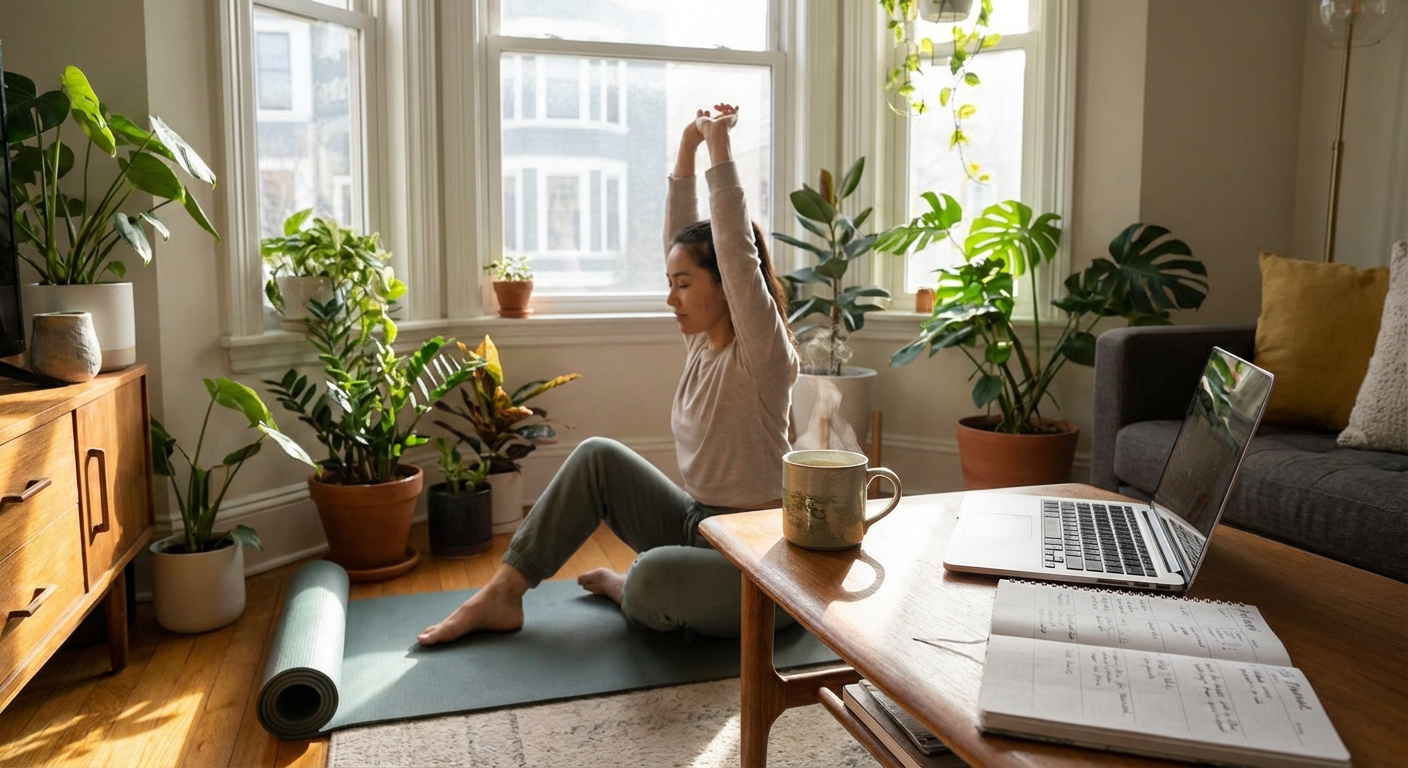
One drink—coffee, tea, lemon water—that you have without multitasking. No inbox, no scrolling. Just a few minutes of doing one thing slowly.
- Evening “power-down” move
A simple signal to your brain that the day is done: closing your laptop in another room, dimming lights, or playing a specific song.
Why it works: The brain loves cues and patterns. Small, repeatable rituals help regulate your nervous system, reduce decision fatigue, and give structure to days that feel chaotic—without demanding a personality overhaul.
Tip 2: Protect Your Energy Like It’s a Limited Battery (Because It Is)
We tend to organize our lives around time: 24 hours in a day, 8 hours of sleep (hopefully), back-to-back meetings. But time isn’t your only limit—your energy is.
A more sustainable approach is to treat your energy like a battery with different modes: physical, mental, emotional, and social. Some things charge you; others drain you.
Try this simple reset:
- Run an “energy audit”
For a week, note what leaves you:
- + Energized
- 0 Neutral
- – Drained
Look at meetings, people, tasks, environments, even social media use.
- Protect your non-negotiable power sources
These might be sleep, movement, alone time, or creative play. Research consistently shows sleep and movement significantly impact mood, focus, and long-term health. Treat them like meetings you can’t casually cancel.
- Adjust your day to your energy curve
If your brain is sharpest in the morning, schedule deep work then and save admin tasks or low-focus activities for later. Put high-energy tasks where you naturally have more to give.
- Use “energy breaks” instead of “time breaks”
Scrolling doesn’t always refill you; it often numbs you. A real energy break might be a 5‑minute walk, a stretch, a glass of water, or a quick chat with someone who makes you laugh.
Balanced living isn’t squeezing more into your day. It’s aligning your life with how your energy actually works.
Tip 3: Design Your Digital World So It Works For You
Your phone isn’t the enemy; the default settings are.
Constant alerts keep your nervous system on edge and train your brain to live in reaction mode. Over time, that can impact focus, sleep, and mental health. But you can redesign your digital environment to support your wellbeing instead of eroding it.
Start with these shifts:
- Turn off non-essential notifications
Keep calls, messages from close people, and what’s truly urgent. Silence everything else—shopping apps, random promotions, most social media alerts. You can still check them; you just won’t be interrupted.
- Create “focus zones” and “offline pockets”
- Focus zones: 30–90 minutes where you silence your phone or use Do Not Disturb while doing meaningful work.
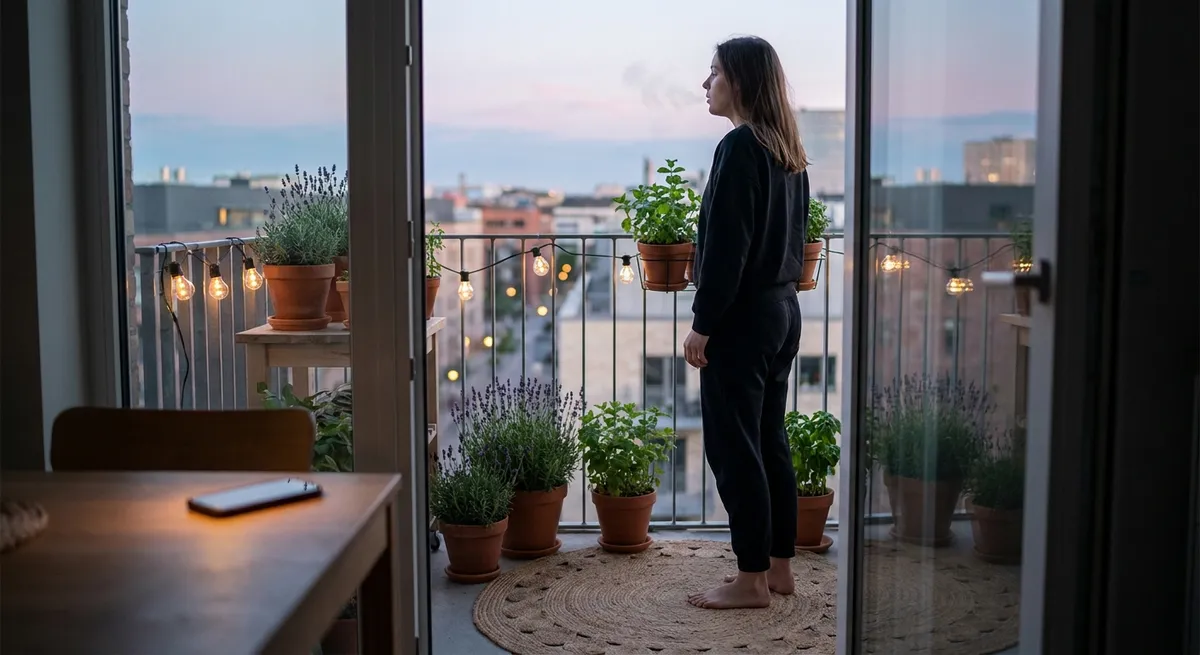
- Offline pockets: phone away during meals, first 20 minutes after waking, last 30 minutes before sleep.
- Curate your feeds like your mental diet
Unfollow or mute accounts that spike anxiety, comparison, or outrage. Follow accounts that teach, inspire, or ground you. What you scroll shapes how you feel.
- Use tech to support—not sabotage—rest
Consider using night shift (warmer screen tones), screen time limits for certain apps, or focus modes that filter who can reach you when you’re resting.
Digital wellness isn’t about disappearing from the internet; it’s about not letting the internet own your nervous system.
Tip 4: Move Like a Human, Not an Algorithm
If exercise only exists in your mind as a 60‑minute intense workout, it will constantly feel like something you’re failing at. Your body doesn’t know if you did a “perfect routine”—it knows if you moved.
Movement is one of the most powerful levers you have for mood, focus, and long-term health. And it doesn't have to be dramatic.
A more sustainable approach:
- Redefine what “counts” as movement
Walking calls, stair breaks, dancing in your kitchen, stretching while watching a show, bodyweight moves between tasks—it all counts.
- Aim for consistency over perfection
Research suggests that even 150 minutes per week of moderate activity (like brisk walking) can significantly reduce the risk of chronic diseases. That could be 20–25 minutes a day.
- Link movement to existing habits
- After coffee → 10-minute walk
- After a meeting → 1–2 minutes of stretching
- Before shower → 10 squats, 10 push-ups (or wall push-ups), 30 seconds of balance practice
- Focus on how movement makes you feel
Use it as a tool: stressed → walk, sluggish → light stretching, anxious → slower, grounding movements.
Movement becomes sustainable when it’s about feeling more alive in your body—not punishing it for how it looks.
Tip 5: Build Relationships That Feel Like Oxygen, Not Obligation
Wellness is not a solo project. Human connection is one of the strongest predictors of long-term health and life satisfaction. The problem is, modern life often leaves us “connected” but lonely—DMs full, heart empty.
To create relationships that support your wellbeing:
- Prioritize depth over constant contact
You don’t need a massive social circle. You need a few people you can be honest with—about your wins and your mess.
- Make low-effort, high-meaning touchpoints
- Voice note instead of a long text
- “Thinking of you” messages with no expectation to reply quickly
- Sending an article, song, or meme that reminds you of them
- Practice honest check-ins
Replace “I’m fine” with something a bit truer: “I’m okay but tired,” “I’m excited and nervous,” “I’m struggling with focus this week.” Real connection starts with real answers.
- Set boundaries that protect your capacity
Saying no (or “not right now”) to social plans you don’t have energy for makes space for the ones you actually crave. Boundaries aren’t walls; they’re agreements that make relationships more sustainable.
Community isn’t just a nice-to-have add-on to wellness. It’s part of the foundation. You weren’t built to carry everything alone.
Conclusion
Balanced and fulfilling living in a modern world isn’t about escaping your life; it’s about editing it.
When you:
- Trade massive routines for micro-rituals
- Protect your energy instead of only your time
- Design your digital world with intention
- Move in ways that honor your body
- Invest in relationships that truly see you
…you start to feel something subtle but powerful: You’re actually here for your own life.
Not just performing it. Not just scrolling through it. Living it.
You don’t need a perfect plan to start. Pick one tip, translate it into something small and doable today, and let that be enough. Wellness isn’t a finish line—it’s the way you move through your everyday.
Your life is already in progress. Now it gets to feel more like it’s yours.
Sources
- Centers for Disease Control and Prevention – Physical Activity Basics – Overview of recommended activity levels and health benefits
- American Psychological Association – Stress Effects on the Body – Explains how chronic stress impacts physical and mental health
- Harvard T.H. Chan School of Public Health – Sleep and Health – Details the critical role of sleep in overall wellness
- Harvard Health Publishing – Loneliness and Social Isolation – Discusses how social connection influences long-term health
- National Institute of Mental Health – Technology and the Future of Mental Health Treatment – Explores how digital tools affect mental health and wellbeing