Rewriting Your Daily Script: Wellness for a Life That Feels True
Most people don’t burn out because they’re weak; they burn out because they’re running someone else’s script on repeat. The meetings, the scrolling, the side projects, the “shoulds”—they pile up until your days feel full but your life feels strangely empty. Wellness, in a modern context, isn’t about escaping all that. It’s about editing it. Intentionally. Boldly. In a way that makes your everyday life feel like it actually belongs to you.
This is your permission slip to stop optimizing your life like a spreadsheet and start designing it like a story you genuinely want to live.
Wellness As Alignment, Not Achievement
Wellness used to be framed as a checklist: eight hours of sleep, green smoothies, a gym membership. If you nailed the list, you were “doing it right.” But the modern world moves too fast and cuts too deep for wellness to just be about habits. It has to be about alignment.
Alignment is what happens when how you spend your time starts matching what you actually care about. Instead of asking, “Am I doing enough?” you start asking, “Is what I’m doing honest?” Honest to your values, your body, your season of life.
This shift matters because your nervous system doesn’t care how impressive your calendar looks; it only cares whether you feel safe, connected, and true to yourself. A day full of activities that aren’t aligned with your values will drain you more than a full day of meaningful effort ever could.
Modern wellness is less “how do I fit more in?” and more “what no longer deserves a place here?” It’s not quieter by default, but it is more intentional. Sometimes it looks like saying no to the extra project. Sometimes it looks like finally saying yes to the hobby, the therapy, the walk outside, or the early bedtime—even when the culture around you glamorizes exhaustion.
Wellness, at its core, is no longer just the absence of illness. It’s the presence of a life that feels like yours.
The Nervous System Is the New Productivity Tool
We’ve been taught to manage our time and our tasks. What we haven’t been taught—at least not nearly enough—is how to manage our internal state. Yet it’s your nervous system that decides whether today feels like a challenge or a threat, a chance to grow or something you need to “white-knuckle” your way through.
When your body is stuck in chronic stress mode (fight, flight, or freeze), your ability to focus, connect, and feel joy gets dialed down. Your brain becomes fantastic at scanning for danger but much worse at noticing nuance, opportunity, or beauty. In that state, even small problems feel like explosions.
Modern wellness means learning to notice your internal “weather report”: the tight jaw, the shallow breath, the impulsive scrolling, the sudden irritability. Instead of judging those signals, you treat them like notifications from your body that something needs attention—not punishment.
Think of nervous system care as the foundation under all your other goals. Sleep, nutrition, movement, creativity, relationships—they all function better when your internal system isn’t constantly in alarm mode. This is why sometimes the most “productive” thing you can do is pause, exhale, and reset your state before pushing forward.
You’re not a machine to be optimized. You’re a human with circuitry that needs care, recovery, and regulation. When that becomes non-negotiable, the rest of your life starts to shift in surprisingly powerful ways.
Five Practical Ways to Live More Balanced and Fulfilled
Wellness doesn’t have to mean reinventing your entire life overnight. Small, repeatable shifts usually create the deepest change. Here are five practical tips you can start weaving into your days—no overhaul required.
1. Replace One Reflex Habit with a Chosen Ritual
Every day is full of reflexes: opening your phone the second you wake up, checking email when you’re bored, streaming something until you fall asleep. These aren’t “bad,” but they are default. And default rarely leads to a life that feels intentional.
Pick just one reflex habit and turn it into a chosen ritual.
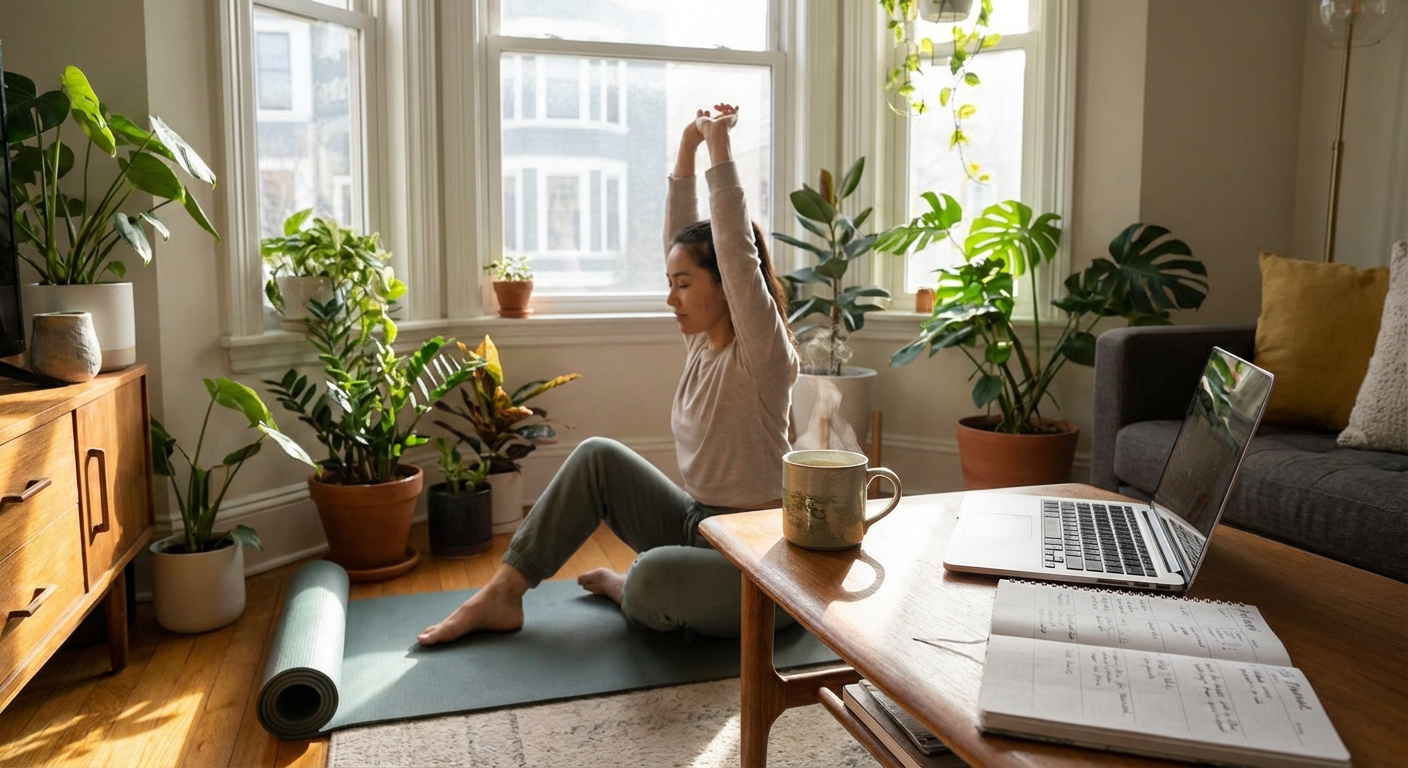
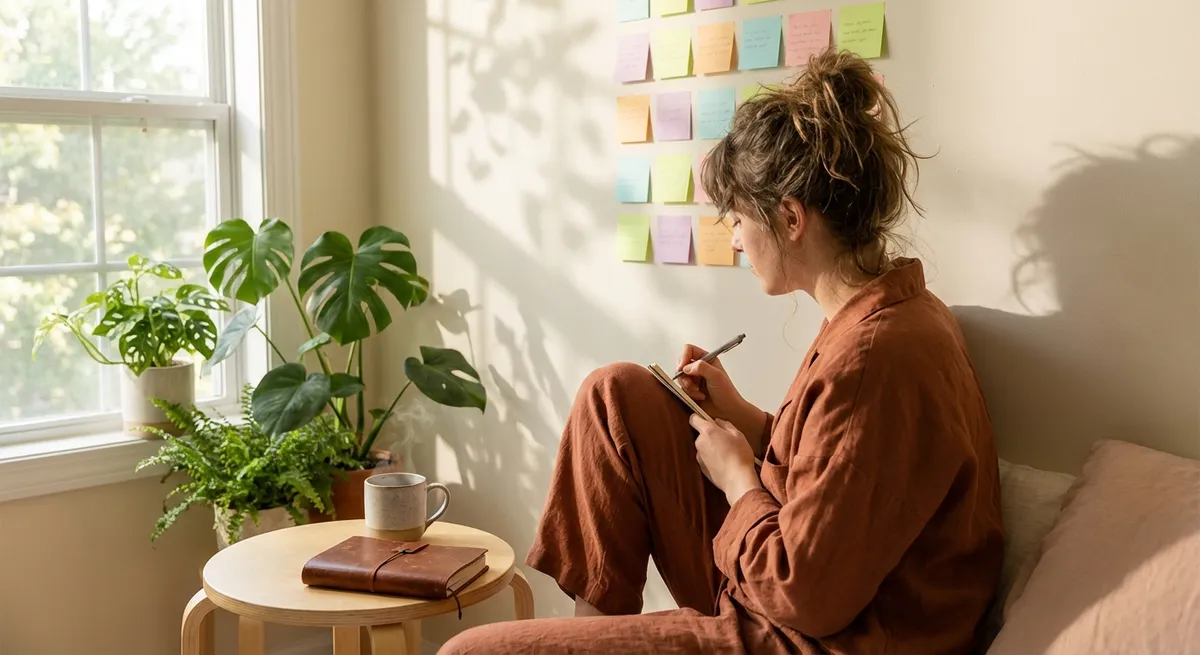
- If you normally wake up and grab your phone, replace the first 5–10 minutes with something that grounds you: stretching, journaling, drinking water, looking out the window.
- If you always scroll after work, try a 10-minute reset ritual instead: shower, change clothes, or step outside before you touch a screen.
- If your nights vanish into random content, choose a “wind-down hour” where you dim lights, read, or calmly prep for tomorrow.
The goal isn’t perfection; it’s interrupting autopilot once a day. That tiny interruption starts teaching your brain a powerful truth: “I’m allowed to choose how my day begins and ends.”
2. Schedule Energy, Not Just Tasks
To-do lists track what you need to get done. They don’t care how you feel while doing it. Balanced living requires a different lens: instead of asking, “What do I need to do today?” ask, “What will this day cost me—and what will it give me back?”
Try this:
- When you look at your day, mark each commitment as energy-giving (+), energy-neutral (○), or energy-draining (–).
- If your day is mostly (–), add at least one small + activity: a walk, a call with someone safe, music you love, a creative hobby, or time outside.
- If you can’t remove a draining block of time, soften its impact: build in a 10–15 minute buffer before and after to decompress, breathe, or simply be off-screen.
You’re not aiming for a perfect ratio. You’re aiming for awareness—and for the courage to adjust where you can. Balanced living is less about doing less and more about refusing to treat your energy as an infinite resource.
3. Redefine Rest as a Strategy, Not a Reward
Many people still treat rest like a prize at the end of a marathon. You “earn” it by exhausting yourself. The problem: your body needs rest during the race, not just after, especially in a world where the race never really stops.
Start reframing rest as a performance strategy—something that helps you show up better, think more clearly, and feel more present.
Practical shifts:
- Micro-pauses: Every 60–90 minutes, take 2–5 minutes away from your screen. Stand up, stretch, get water, or look out a window. No phone.
- Real breaks: During lunch, resist the urge to work through. Eat away from your primary workspace, even if it’s just at a different spot in the room.
- Weekly “off-switch”: Choose one regular block of time (an evening, a morning, or a few hours on the weekend) where you intentionally lower input: fewer notifications, fewer obligations. Treat it like an appointment with yourself.
Rest that’s planned feels less like “slacking” and more like strategy. The more you experience how rest improves your focus, mood, and creativity, the easier it becomes to defend it.
4. Curate Your Inputs Like They’re Shaping You—Because They Are
Your brain is constantly being influenced by what you see, hear, and read. If your feeds are filled with outrage, comparison, and highlight reels, your nervous system will quietly adapt to that as “normal.” Over time, this normal can start to feel exhausting.
Instead of doing a dramatic “digital detox,” get curious about what you’re consuming and how it makes you feel afterward.
Try this simple audit for a week:
- After using social media, news, or streaming, rate your mood: better, same, or worse.
- Notice patterns—accounts, topics, or times of day that consistently leave you drained or anxious.
- Intentionally add in at least a few uplifting, grounding inputs: educators, creators who share realistically, accounts that talk about mental health, learning, or creativity without the pressure.
You don’t have to opt out of the modern world to protect your mental health. You just need to realize you’re allowed to be a curator, not just a consumer.
5. Make Micro-Connections a Daily Non-Negotiable
The modern lifestyle is weirdly connected and lonely at the same time. You can be reachable 24/7 yet still feel like no one really sees you. Deep, lifelong friendships are powerful—but tiny, everyday moments of connection matter more than we tend to realize.
Micro-connections are short, real interactions that remind you you’re not alone in the world.
Build them into your day by:
- Looking up and actually greeting the barista, the driver, the person at the front desk.
- Sending one genuine message a day: “Thought of you when I saw this” or “Checking in—how are you really?”
- Being slightly more honest in safe spaces. Instead of “I’m fine,” try “Today’s been a lot, but I’m hanging in there.”
Research consistently links social connection with better mental and physical health, but you don’t need a massive circle to feel the benefits. You just need regular proof—however small—that you and your life matter to someone.
Designing a Life You Don’t Need to Escape From
Wellness isn’t about crafting a life that’s always calm, always soft, always perfectly balanced. Real life will still bring deadlines, hard seasons, and unexpected chaos. The difference is that when you treat wellness as alignment, nervous system care, and small daily choices, you stop feeling like you’re constantly bracing for impact.
You start feeling like a co-creator rather than just a passenger.
When you replace one reflex with a chosen ritual, schedule around your energy, treat rest as strategy, curate your inputs, and nourish micro-connections, you’re not just “doing self-care.” You’re rewriting your daily script—line by line—into something more honest, sustainable, and deeply yours.
You don’t have to wait for the perfect moment, the long vacation, or the complete life overhaul. Your next chance to live differently is hidden in the next small choice you make. Start there. Then keep going.
Sources
- Centers for Disease Control and Prevention – Well-Being Concepts – Overview of modern well-being and its dimensions beyond just physical health
- National Institutes of Health – Social Relationships and Health – Research summary on how social connection impacts physical and mental health
- Harvard Health Publishing – Understanding the Stress Response – Explanation of the nervous system’s role in stress and wellness
- American Psychological Association – Why Sleep Is Important – Evidence-based insights on rest, performance, and mental health
- Greater Good Science Center, UC Berkeley – How Your Social Media Feeds Affect Your Well-Being – Examination of digital inputs and their influence on mood and wellness